
When DIY Electrical Work Makes Sense
Not every electrical issue requires a professional. For small, low-risk tasks, a confident homeowner with basic tools can often handle the job safely. The key is knowing where the line is – between something simple and something that could lead to shock, fire, or code violations. See our blog post about 6 DIY Electrical Repairs You Should Avoid for examples of these types of projects.
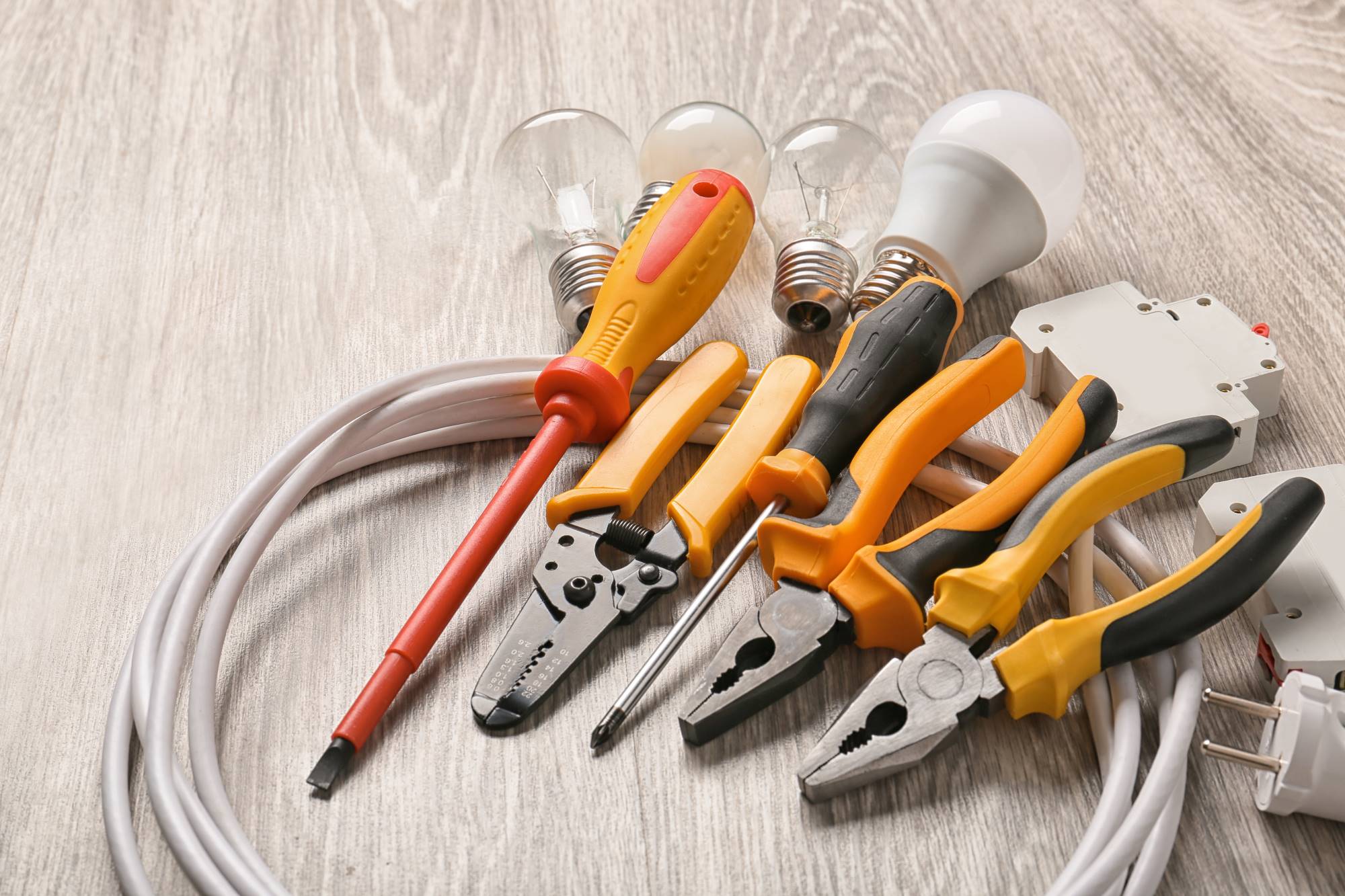
Here are a few DIY electrical tasks most homeowners can safely tackle:
#1 Replacing a Light Bulb: Always turn the switch off first and check the wattage on the fixture before installing a new bulb.
#2 Resetting a Tripped Breaker: If power goes out to part of your home, a breaker may have tripped. Flip it fully to “OFF” and then back to “ON.”
#3 Changing Outlet or Switch Covers: These decorative covers can be replaced safely with the power still on, just be sure not to remove the electrical device underneath.
#4 Testing an Outlet: A simple plug-in outlet tester (available for under $10) can confirm if power is flowing and detect reversed wiring.
#5 Replacing Batteries in Smoke or Carbon Monoxide Detectors: Simple but essential for safety – aim for twice a year.
Safety Tips for Every DIY Electrical Job
Even when the task seems simple, electricity demands respect. Before you touch a switch plate or open a panel, remember these non-negotiable safety steps:
- Turn off power at the breaker for anything involving wires.
- Use insulated tools and stand on a dry surface.
- Test before you touch. Use a non-contact voltage tester to confirm power is off.
- Avoid metal ladders when working near light fixtures.
- Keep hands dry and wear shoes with rubber soles.
- Never guess with wiring colors — they may not always follow standard conventions.
When a “Simple Fix” Isn’t So Simple
Many electrical jobs start small but quickly get complicated. If you encounter any of the following, it’s time to stop and call a professional:
- Wires that are discolored, brittle, or sparking
- Circuit breakers that trip repeatedly
- Outlets that feel warm or emit a burning smell
- Lights flickering even after bulb replacement
- Confusing or unlabeled breaker panels
- Any work involving aluminum wiring or GFCI/AFCI devices
Electrical systems are interconnected. Mistakes in one area can create hazards elsewhere — and those hazards may not show up until weeks later.
How to Prepare for a Professional Electrician Visit
If you realize a project is beyond DIY level, preparing ahead can make your electrician’s visit faster and more affordable. Here’s how to help us help you:
- Label your breaker panel clearly (living room, kitchen, garage, etc.)
- Take a few photos of the problem area before turning off power
- Clear furniture or items from around outlets or fixtures
- Write down what happened leading up to the issue (e.g., “breaker tripped after plugging in space heater”)
Final Thoughts
DIY electrical work can be satisfying and cost-effective — when done safely and within limits. But knowing when to stop is just as important as knowing where to start.
If you’re unsure whether your project is safe to handle yourself, call the experts at Fabri Electric in Lawrenceville, GA at 404-338-8405. Our licensed electricians are always happy to offer honest advice and professional service that keeps your home safe and up to code.


